Why the Freedom and Safety of Scientists Matters
“Ebola outbreak.” “Hantavirus outbreak.” “COVID-19.” “SARS.”
These words have become familiar to people around the world. Each time a new health emergency emerges, governments mobilize, hospitals activate response plans, and communities seek answers.
Behind every response, however, there is often an unseen group of professionals working tirelessly to understand the threat: scientists.
Whether in laboratories, field stations, research centers, or behind computer screens, scientists play a critical role in identifying diseases, tracking outbreaks, developing treatments, and providing the evidence needed for informed decision-making.
Yet an important question remains:
What is the cost of losing a scientist?
Scientists on the Front Line
Scientists are often at the forefront of addressing some of the world’s most complex challenges. They contribute not only to public health but also to climate action, food security, environmental protection, technological innovation, and sustainable development.
However, many scientists face significant risks while carrying out their work.
Some operate in conflict zones where laboratories and research facilities may be damaged or destroyed. Others face threats, intimidation, harassment, or persecution because of their research findings.
In some cases, scientists are forced to leave their countries. In others, they are prevented from conducting research freely or sharing evidence-based conclusions.
Women scientists often face additional barriers, including discrimination, online harassment, and unequal access to opportunities.
These challenges can limit scientific progress and weaken society’s ability to respond to emerging crises.
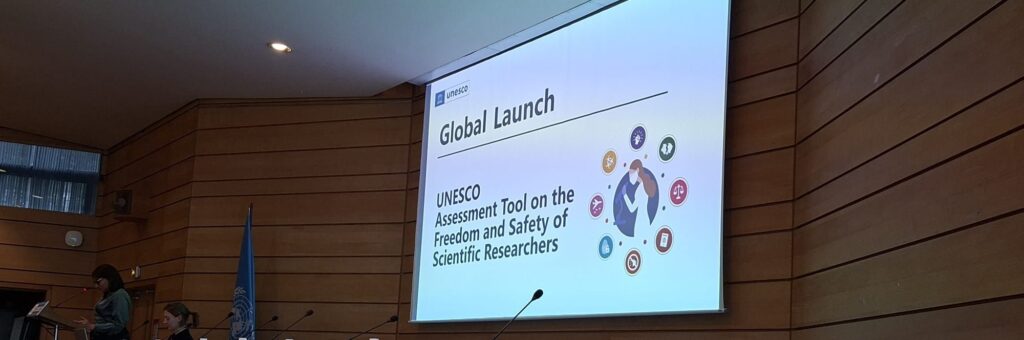
UNESCO’s Commitment to the Freedom and Safety of Scientists
During the UNESCO Policy Dialogue on Political Leadership for the Freedom and Safety of Scientists, participants emphasized the importance of protecting scientific freedom and ensuring safe conditions for research.
A clear message emerged from the discussions:
The world cannot afford to take scientists for granted.
Scientific progress depends on freedom.
Scientists must be free to ask questions, conduct research, challenge misinformation, and communicate their findings without fear.
These freedoms are not privileges. They are essential conditions for innovation, evidence-based policymaking, and sustainable development.
Why Scientific Freedom Matters
When scientists are unable to work safely and independently, the consequences extend far beyond the scientific community.
When scientists are silenced, evidence becomes weaker.
When evidence becomes weaker, public policies become less effective.
When public policies become less effective, lives can be put at risk.
Protecting scientists therefore means protecting the quality of information upon which societies depend.
Strong scientific institutions help governments make informed decisions, improve public health, strengthen resilience, and support economic growth.
A Shared Responsibility
The protection of scientists requires the commitment of governments, international organizations, academic institutions, and society as a whole.
Creating safe and supportive environments for research is essential for addressing today’s global challenges and preparing for those of tomorrow.
As the world continues to face health emergencies, climate change, food insecurity, and technological transformation, the role of science has never been more important.
Protecting scientists is not simply about protecting a profession.
It is about safeguarding knowledge, strengthening evidence-based decision-making, and protecting humanity’s future.